Direct Trade Coffee: Transparency, Quality, and Connection
Why Goodlife chose direct trade
By Stephanie - 1 April, 2026
Why Goodlife prioritizes direct trade in coffee
In a world where consumption is becoming increasingly conscious, the origin of the products we buy matters more than ever. At Goodlife, this reality fully applies to coffee. More than just a beverage, coffee is the result of the work of thousands of producers around the world. That’s why Goodlife is committed, as much as possible, to a direct trade approach. But what does that actually mean, and why is it so important?
Creating a human connection with producers
Direct trade first and foremost makes it possible to build a direct relationship between roaster and producer. Unlike traditional supply chains, which are often long and opaque, this approach significantly reduces the number of intermediaries.
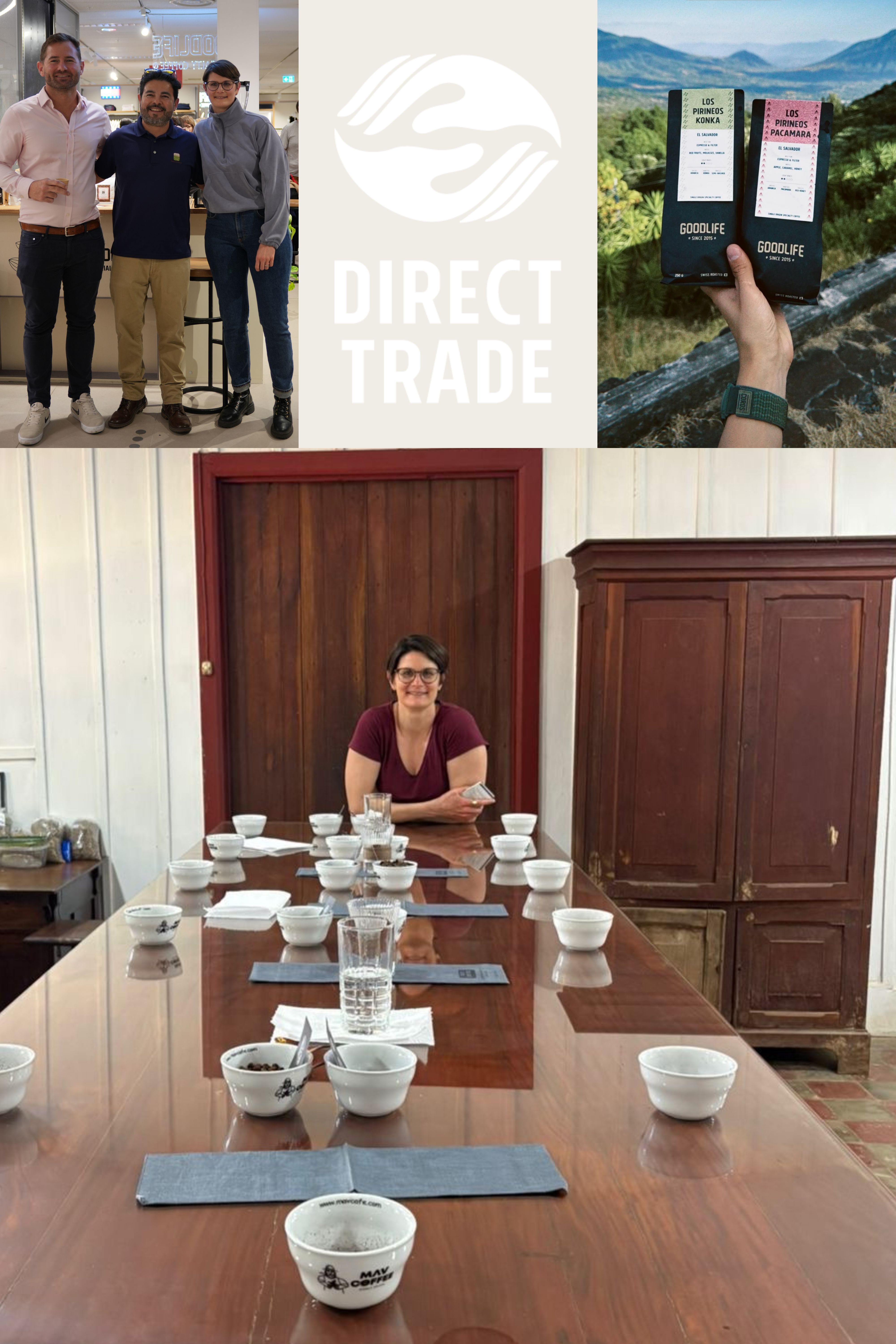
At Goodlife, this commitment is not just theoretical. We recently had the opportunity to travel to El Salvador and meet three producers we work with: Diego from Los Pirineos, Irene from MAV Coffee, and Jorge from Tierra Bendita. These on-the-ground meetings are essential. They allow us to truly understand the realities of coffee production while building genuine and lasting relationships.
This connection goes beyond the farms. We also welcomed Jorge to a “Meet the Producer” event. This moment of exchange gave our community the chance to put a face to the coffee they drink and hear directly about the story, challenges, and passion behind each harvest.
Ensuring greater price transparency
One of the major challenges in the coffee market is the lack of transparency. In traditional supply chains, it is often difficult to know how much of the final price actually goes back to the producer.
Direct trade changes this dynamic. By working directly with producers like Diego, Irene, and Jorge, Goodlife knows exactly how much is paid for each lot of coffee. This helps ensure fairer compensation, often above market standards.
This transparency is essential—not only for producers, but also for consumers. It gives real meaning to every cup of coffee. Behind the product, there is a clear, conscious, and fair relationship.
Encouraging sustainable practices
Direct trade also has a strong impact on agricultural practices. By building long-term relationships, Goodlife can encourage more sustainable methods of production.
During our visit to El Salvador, we were able to see the efforts made by our partners to improve quality while respecting their environment. Whether it’s soil management, biodiversity, or coffee processing methods, these initiatives are often made possible thanks to greater economic stability.
By paying fair prices and committing for the long term, we help give producers the means to invest in their future and in their communities.
Our commitment
Direct trade is at the heart of Goodlife’s vision. It allows us to build strong human connections, ensure price transparency, and support sustainable practices.
Our trip to El Salvador and our meetings with Diego, Irene, and Jorge perfectly illustrate this approach. More than just a sourcing model, direct trade is a way of rethinking the relationship between producers, roasters, and consumers.
In every cup, there is a story. And at Goodlife, we do everything we can to make sure it is as fair and authentic as possible.
We are proud to announce that our Hakuna Matata coffee is now organic and sourced through direct trade. This means we work directly with the producers, ensuring fairer pay and full traceability, whilst highlighting the exceptional quality of the beans. This choice reflects our commitment to more ethical, sustainable and transparent coffee, without compromising on taste.